
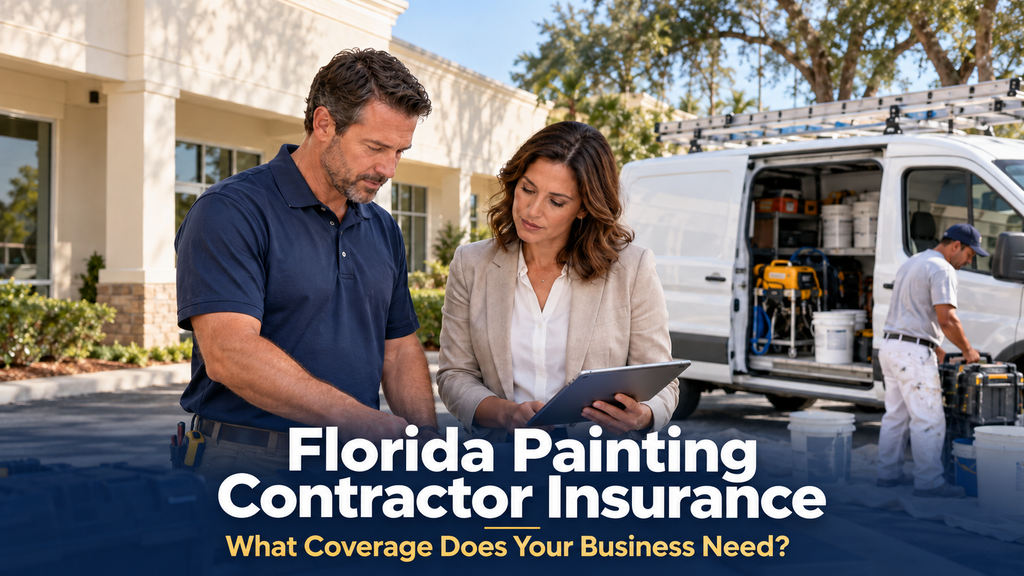
A painting crew finishes an exterior project just before a summer storm. The customer later reports overspray on a neighboring car. On another job, a worker falls from a ladder. The contractor has insurance, but the owner is unsure which policy should respond.
That uncertainty is common. A painting business can face claims involving employees, customers, vehicles, tools, chemicals, subcontractors, and work completed months earlier. One policy rarely addresses every exposure.
The right Florida painting contractor insurance program starts with the work you perform, the people who perform it, and the contracts you sign. This guide explains the main coverages to review, what each one is designed to address, and where common gaps can appear.
What insurance does a Florida painting contractor need?
There is no single insurance package that fits every painting business. A residential painter with one work van has different exposures from a commercial contractor that uses subcontractors, rents lifts, and performs industrial coatings.
Many painting contractors should review these lines of coverage:
- Workers’ compensation and employers’ liability
- Commercial general liability
- Commercial auto, including hired and non-owned auto when relevant
- Tools and equipment coverage, often through an inland marine policy
- Commercial property and business income coverage
- Contractors pollution liability for chemical, overspray, or pollution exposures
- Umbrella or excess liability
- Cyber and employment practices liability, depending on operations
The list is a starting point, not a promise that every policy will cover every claim. Policy forms, endorsements, exclusions, limits, deductibles, and the facts of a loss all matter.
Start with the work your company actually performs
An insurance application may ask for a general description such as “painting.” That description may not capture the whole operation. The details matter when an underwriter evaluates the risk and when a claim is reviewed.
Write down every service the company offers. Include interior and exterior painting, pressure washing, surface preparation, drywall repair, staining, cabinet refinishing, epoxy flooring, waterproofing, roof coatings, industrial coatings, and work at height. Note which services are performed by employees and which are subcontracted.
Also consider the settings where you work. A vacant home, an occupied condominium, a school, a warehouse, and a manufacturing facility present different hazards. The type of building, project size, access, and customer contract can all change the risk.
When you add a service or take on a larger project, tell your insurance professional before work begins. A new operation may affect eligibility, rating, exclusions, or the coverage you need. It can also raise licensing, safety, or environmental questions.
Florida’s contractor licensing rules are scope-specific. State and local requirements can depend on the work being performed, and Florida changed rules for certain local specialty contractor licenses effective July 1, 2025. Confirm applicable requirements with DBPR and the local building department before accepting work that goes beyond ordinary painting. Insurance does not replace licensing or permitting.
Workers’ compensation for painting contractors
Painting can involve ladders, scaffolding, lifts, repetitive motion, sharp tools, solvents, and outdoor work in Florida heat. If an employee is injured, workers’ compensation is designed to provide covered medical and wage-loss benefits under the applicable law and policy.
Florida generally treats painting contractors as part of the construction industry for workers’ compensation purposes. A construction industry employer with one or more part-time or full-time employees working in Florida must obtain coverage. Florida’s Division of Workers’ Compensation explains that an eligible corporate officer or LLC member with a valid exemption is not counted as an employee for this threshold. The exemption is for the qualifying individual; it does not exempt the business or its other workers.
Do not assume a worker is an independent contractor just because the person receives a 1099 or works for a subcontractor. Classification depends on the actual relationship and applicable rules. Review each worker’s role, payroll, ownership status, and proof of coverage. If subcontractors are involved, verify their workers’ compensation status before they start and keep records for the full job and policy audit.
Workers’ compensation premiums are tied to factors such as payroll, job classifications, and experience. Keep payroll and job-duty records current. If an employee performs duties that differ from the duties reported to the carrier, discuss the classification with your agent or carrier.
Ask whether your policy includes employers’ liability and whether limits are appropriate for your contracts and operations. Workers’ compensation and employers’ liability are related parts of a policy, but they address different legal exposures.
General liability for property damage and injury claims
Commercial general liability, often called general liability or CGL, is central to many Florida painting contractor insurance programs. It may respond to certain third-party bodily injury or property damage claims arising from covered operations, subject to the policy terms.
Consider a painter who accidentally knocks over a ladder and damages a customer’s flooring. Or imagine a passerby trips over a hose near a work area. General liability may be relevant, but the policy language and circumstances determine whether coverage applies.
Painting claims can involve property that is being worked on. For example, paint could damage flooring, fixtures, or a finished surface. Some policies restrict or exclude coverage for property in the insured’s care, custody, or control, or for the particular part of property being worked on. A faulty application may also lead to a dispute over the cost to redo the work versus damage that results from it.
Completed operations is another important issue. A customer may discover peeling, water intrusion, overspray, or other alleged damage after the crew has left. Ask how the policy addresses completed operations, what limits apply, and whether any endorsements narrow coverage for your type of work.
A certificate of insurance does not change policy terms. If a contract requires additional insured status, a waiver of subrogation, or specific completed-operations protection, confirm that the actual endorsement is in place. A certificate alone does not grant those rights.

Overspray, fumes, lead, and pollution exposures
A Florida painting job can create more than ordinary property damage risk. Wind can carry paint or coating onto cars, windows, landscaping, or neighboring buildings. Solvents and other products may spill. Fumes can affect occupants or nearby businesses. Wash water and paint residue can reach storm drains or soil.
General liability policies may contain pollution-related exclusions or limitations. Contractors pollution liability may be worth discussing when your work involves chemicals, coatings, overspray, spills, runoff, or environmental cleanup allegations. Coverage varies, so describe the products and processes you use when asking for a quote.
Prevention is essential. Check wind and weather conditions. Protect nearby property. Control access to the work area. Use proper ventilation and containment. Store products securely. Follow product labels and safety data sheets. Set clear stop-work conditions when conditions make safe application difficult.
Older buildings require extra care. The federal EPA Renovation, Repair and Painting (RRP) program generally requires firms performing covered work that disturbs paint in pre-1978 housing or child-occupied facilities to be certified and to follow lead-safe practices. The rules have specific scope and exceptions, so verify whether a project is covered before disturbing painted surfaces. RRP certification is also distinct from lead abatement certification.
Insurance does not replace environmental compliance or safe work practices. Tell your insurance professional if you perform lead-related work, remediation, or services beyond standard painting.
Commercial auto, employee vehicles, and trailers
Painting crews often travel with ladders, sprayers, paint, and other equipment. Commercial auto coverage should reflect how each vehicle is titled and used, who drives it, and where it travels.
Review coverage for company-owned vans and trucks, trailers, and any vehicles used to transport employees or supplies. If employees use personal vehicles for business errands, ask about hired and non-owned auto liability. That coverage may help address certain liability claims involving vehicles the business does not own, but it does not automatically insure the employee’s vehicle for physical damage.
Maintain a current list of vehicles and regular drivers. Set expectations for driver eligibility, distracted driving, backing, loading, and securing equipment. Confirm that the insurer knows about vehicle changes and business use.
Tools, sprayers, lifts, and materials
A work van can hold thousands of dollars in spray equipment, ladders, hoses, hand tools, and supplies. Commercial auto insurance usually is not designed to insure all business tools and equipment inside the vehicle.
Inland marine or contractors’ equipment coverage may protect eligible tools and equipment while in transit, at a jobsite, or in storage. The policy may have limits for theft from an unattended vehicle, coverage territory, scheduled equipment, rented equipment, or items left overnight. Read those conditions before a loss occurs.
Create an equipment inventory with descriptions, serial numbers, purchase dates, and current replacement values. Take photos and save receipts. Ask how newly acquired equipment is handled and whether rented or borrowed equipment is included. Review coverage for materials waiting to be installed or delivered to a jobsite.
Commercial property and business income
If your business owns or rents an office, shop, or warehouse, review commercial property coverage for the building (if you own it), contents, computers, inventory, and business personal property. A business owner’s policy may combine property and liability coverages for some eligible businesses, but availability and terms vary.
Ask about business income or business interruption coverage. It may help replace income or pay certain continuing expenses after a covered property loss causes a necessary interruption. The policy’s trigger, waiting period, limit, and period of restoration all matter.
In Florida, review windstorm and hurricane deductibles, protective safeguards, and any roof or property conditions. Flood is generally a separate coverage discussion. A standard property policy may not cover flood damage. The NFIP’s commercial flood coverage addresses certain building and contents losses, but it does not cover business interruption or loss of use. Discuss flood options and recovery planning with your agent.
Umbrella or excess liability
A serious injury or large property damage claim can exceed the limit on a primary policy. Commercial umbrella or excess liability may provide higher limits above certain underlying policies, subject to its own terms and exclusions.
Check which policies must sit underneath the umbrella, whether the required limits are maintained, and whether the umbrella covers the operations and contracts you actually have. Do not assume an umbrella automatically fills every gap in a general liability or auto policy.
Cyber and employment practices coverage
Even a small painting contractor may keep customer addresses, employee records, banking information, and payment details. A cyber incident could disrupt scheduling, payroll, email, or customer communications. Cyber insurance may help with certain response and recovery expenses, depending on the policy.
Employment practices liability insurance may be relevant if the business has employees. It can address certain allegations such as discrimination, harassment, or wrongful termination, subject to terms and exclusions. Good hiring, supervision, documentation, and workplace practices remain important even when insurance is in place.
Contracts, certificates, and subcontractors

Many general contractors, property managers, and commercial customers require contractors to carry specific limits and endorsements. Before signing, compare the insurance section of the contract with your policies. Pay attention to required limits, additional insured wording, completed operations, primary and noncontributory language, waivers, and subcontractor requirements.
Do not promise coverage that you have not confirmed. Send the contract to your insurance professional early enough to review it. If a requirement cannot be met, resolve the issue before mobilizing.
For subcontractors, collect current certificates and verify coverage directly where possible. Check that names match the contracting entity, dates cover the work period, and the lines and limits meet the written requirements. For workers’ compensation, use Florida’s official proof-of-coverage resources to verify coverage or exemptions. Keep a dated record of each verification.
A practical review before you bind or renew
Use these questions to prepare for a coverage conversation:
- What services do we perform now, and what services have we added?
- How many employees do we have, and what work does each person perform?
- Do we use subcontractors, temporary labor, or a PEO? How do we verify coverage?
- What vehicles, trailers, drivers, and business uses should be listed?
- What tools and equipment would be costly to replace after theft or damage?
- Do we work around occupied buildings, older housing, schools, or sensitive property?
- Do we use solvents, coatings, pressure washing, or products that create pollution exposures?
- What do our customer contracts require for insurance and endorsements?
- What are our windstorm, flood, and business income exposures?
- What changed in our payroll, sales, locations, services, or subcontractor use since the last renewal?
Bring current policies, sample contracts, payroll estimates, vehicle lists, equipment values, and subcontractor records to the meeting. Accurate information helps the insurance professional identify questions that need follow-up.
Build coverage around the way you paint
Florida painting contractor insurance works best when it reflects the real operation, not only the business name or a short description on an application. Review the crew, subcontractors, vehicles, equipment, services, contracts, and locations together.
Start with a current coverage inventory. Then compare it with your contracts and the work you plan to take on next. If the business has changed, update your insurance professional before the next job begins.
Download the Painting Contractor Insurance Checklist to organize your current policies, identify questions, and prepare for an insurance review with Florida Risk Partners.
This article is for general educational purposes only. It is not legal advice, a coverage opinion, or a substitute for reviewing the actual policy, endorsements, contracts, and applicable law. Coverage varies by insurer and policy form. Confirm requirements with the appropriate Florida authorities and qualified insurance or legal professionals.
Frequently asked questions
Florida generally applies construction industry requirements to painting contractors. Employers in the construction industry with one or more employees working in Florida are generally required to carry workers’ compensation. A valid exemption may apply to an eligible corporate officer or LLC member, but the exemption applies to that individual rather than the whole company. Confirm your situation with the Florida Division of Workers’ Compensation.
It depends on the policy wording and facts. Some policies contain exclusions or limitations for property being worked on, faulty workmanship, or property in the contractor’s care, custody, or control. Review these provisions before relying on a general liability policy for a specific claim scenario.
Usually, commercial auto coverage is focused on the vehicle and certain vehicle-related exposures. Business tools may require separate equipment or inland marine coverage. Review theft conditions, limits, and vehicle security requirements with your agent.
Not every contractor needs the same policy. However, overspray, chemical spills, fumes, runoff, and certain coatings can create pollution-related allegations. Ask an insurance professional to review your actual products, processes, contracts, and existing exclusions.
No. A certificate provides information about policies, but it does not amend coverage. The required endorsement must be issued and apply to the work and parties involved.